Caocao, a well-known rideshare service in China comparable to Uber and Lyft in the US, employs primarily full-time drivers.
I led redesign of Driver Scheduled Trip feature to improve accepting trips experience and increase platform revenue.
Design Lead
UX Design
User Research
1 x product manager
1 x UI designer
4 x engineer
1 x data scientist
2021.04 – 2021.06
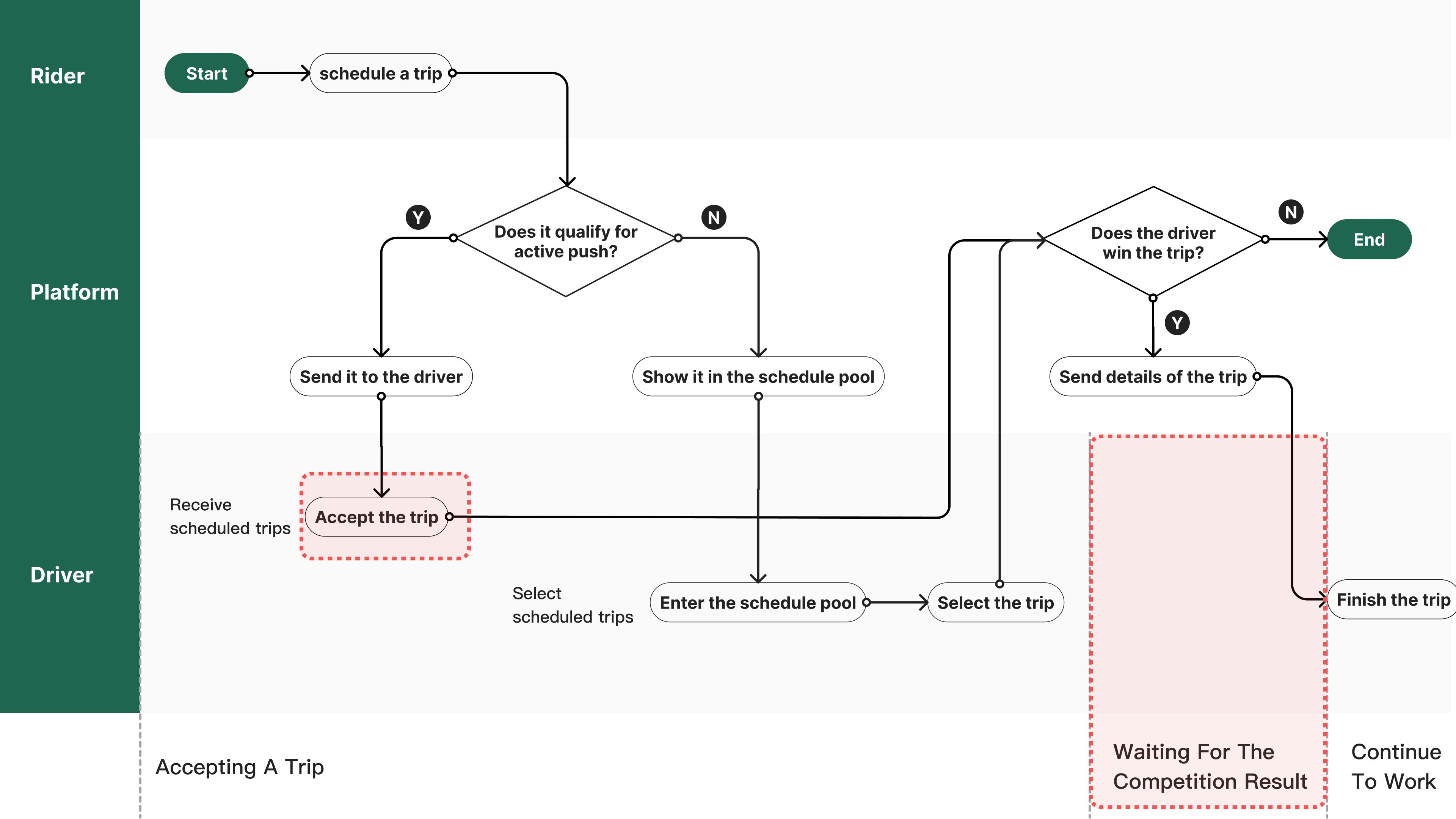
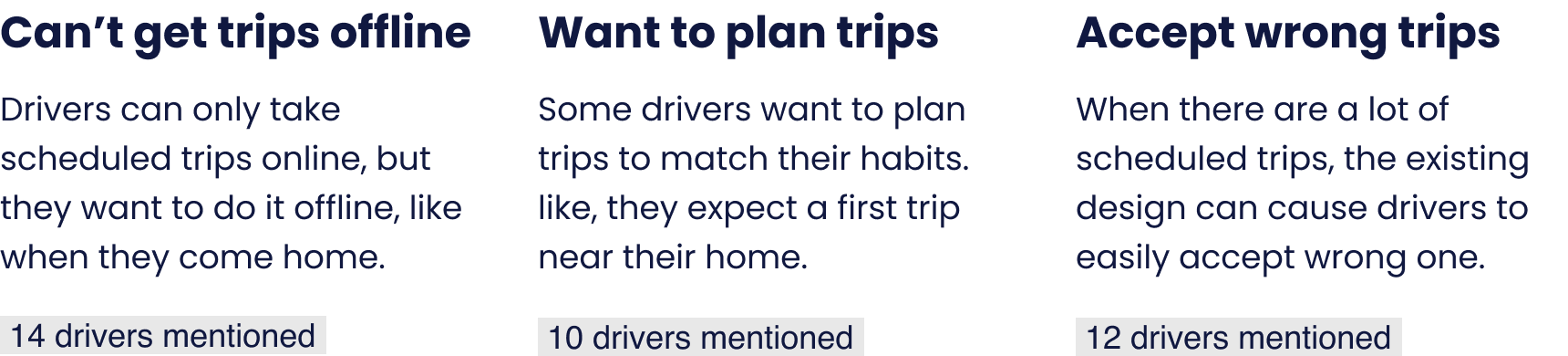
Drivers can only passively receive scheduled trips, which will miss many opportunities to receive more trips.
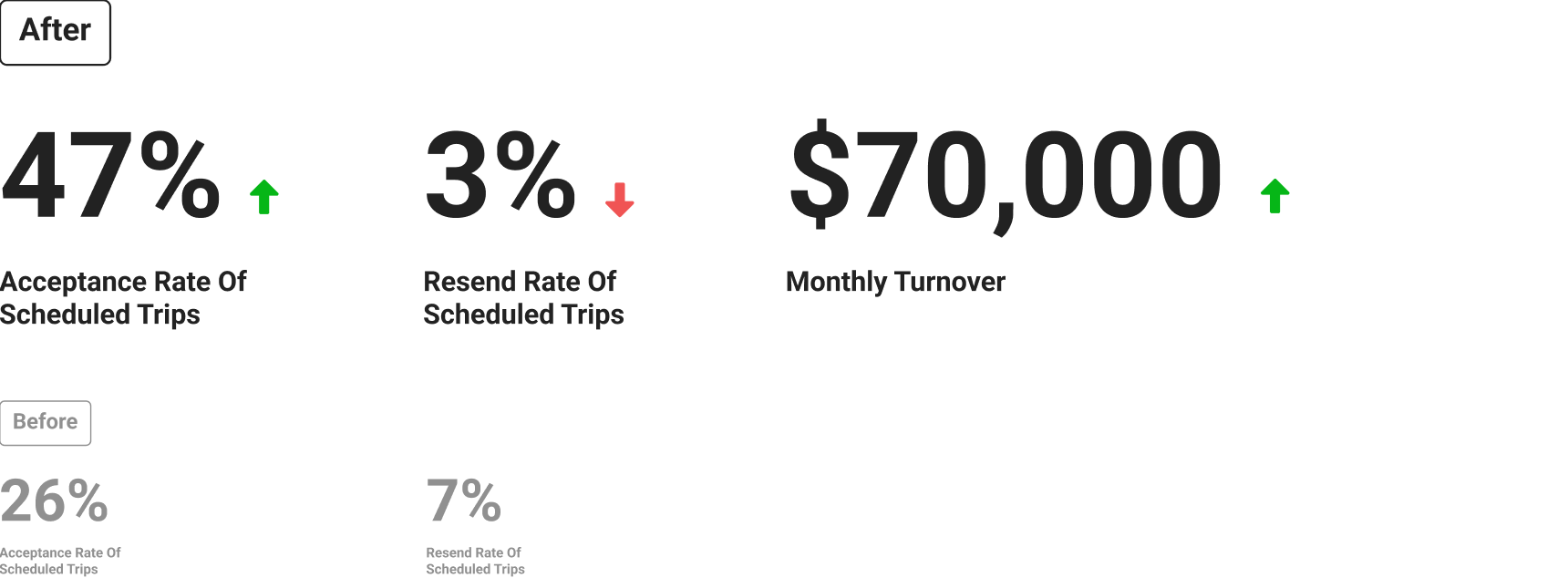
I worked with the data analytics team, got the data: acceptance rate of scheduled trips was just 26%.
It means that many trips were lost, which can affect riders’ experience and drivers’ salaries. We wanted to improve this data.
I conducted a user interview with one UI designer. From 16 drivers, we learned: drivers desire more flexibility, and it existed experience problems.
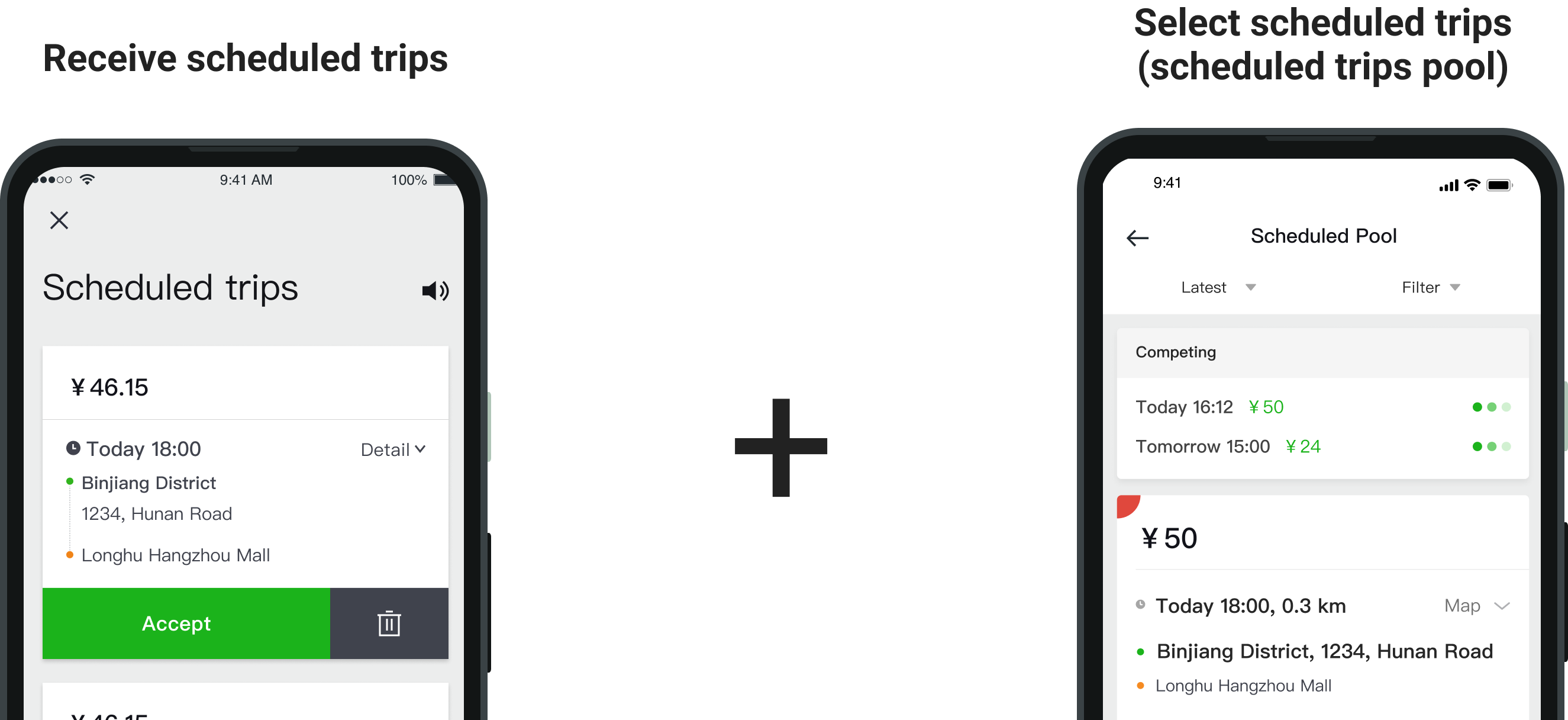
Retaining current dispatch strategy, introducing driver choice in selecting city-wide scheduled trips.

After an in-depth understanding of the product requirement, combined with the previous user research, I found that there were two parts I need to put more efforts to design: solving the original experience problems of the scheduled trips feature and making the process of accepting the new trip smooth. Specifically.

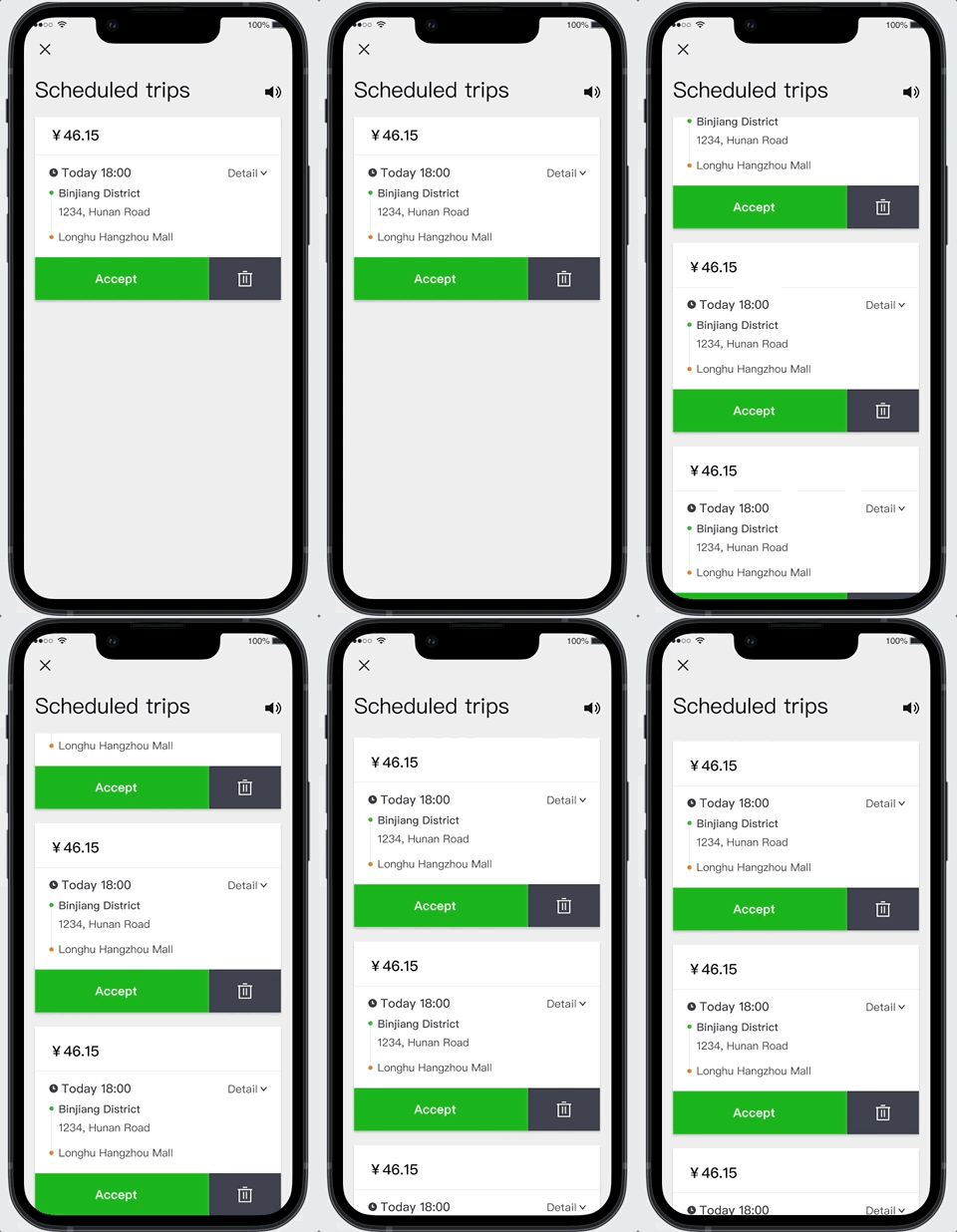
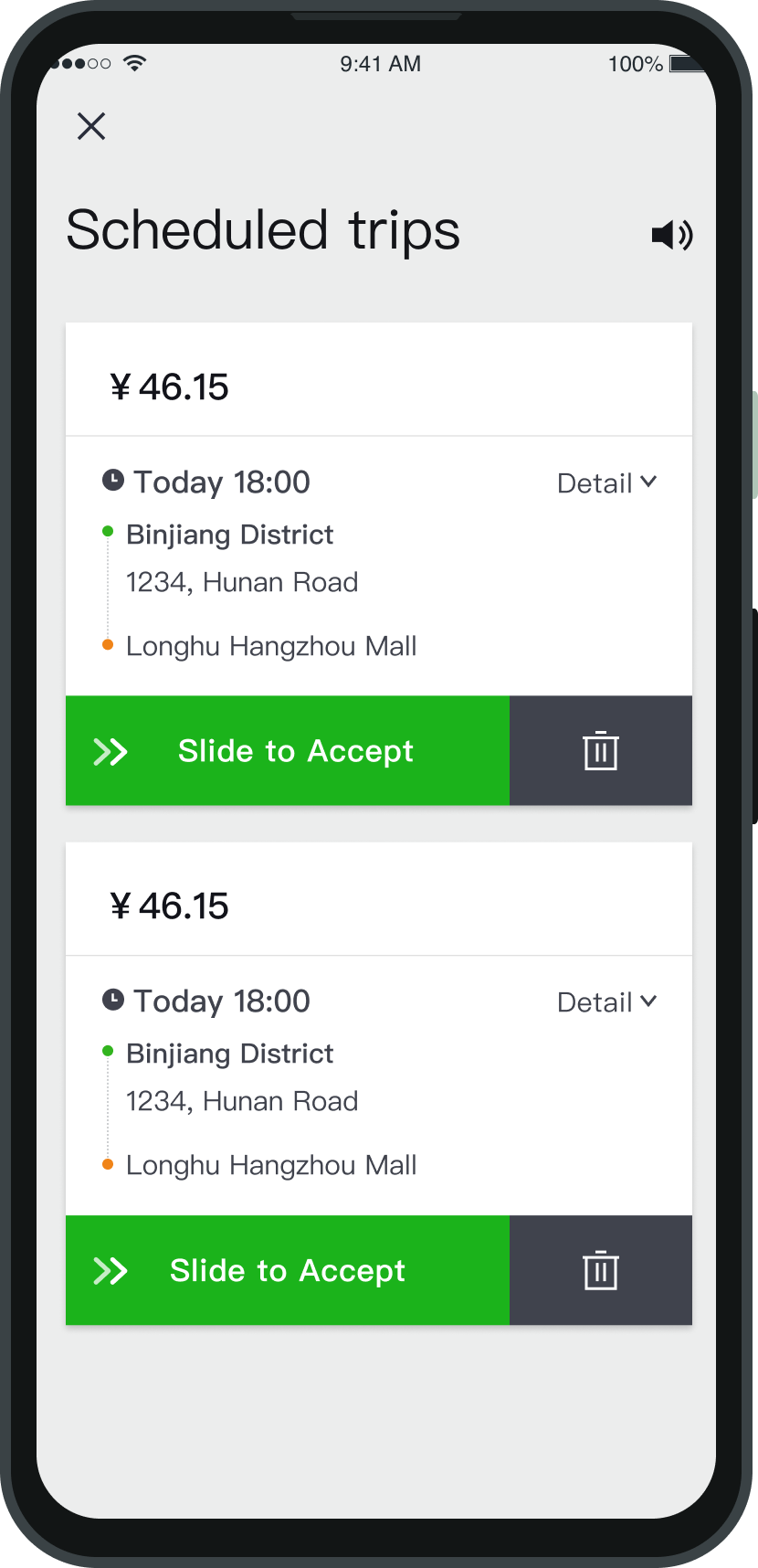
Drivers face challenges accurately accepting specific scheduled trips when many scheduled trips are incoming, leading to potential acceptance of the wrong trip, incurring costs or negative emotions.
Resend rate of scheduled trips is 7%.

I started brainstorming and conducted competitor analysis, having many ideas.

longer action time allows drivers to realize and release button.

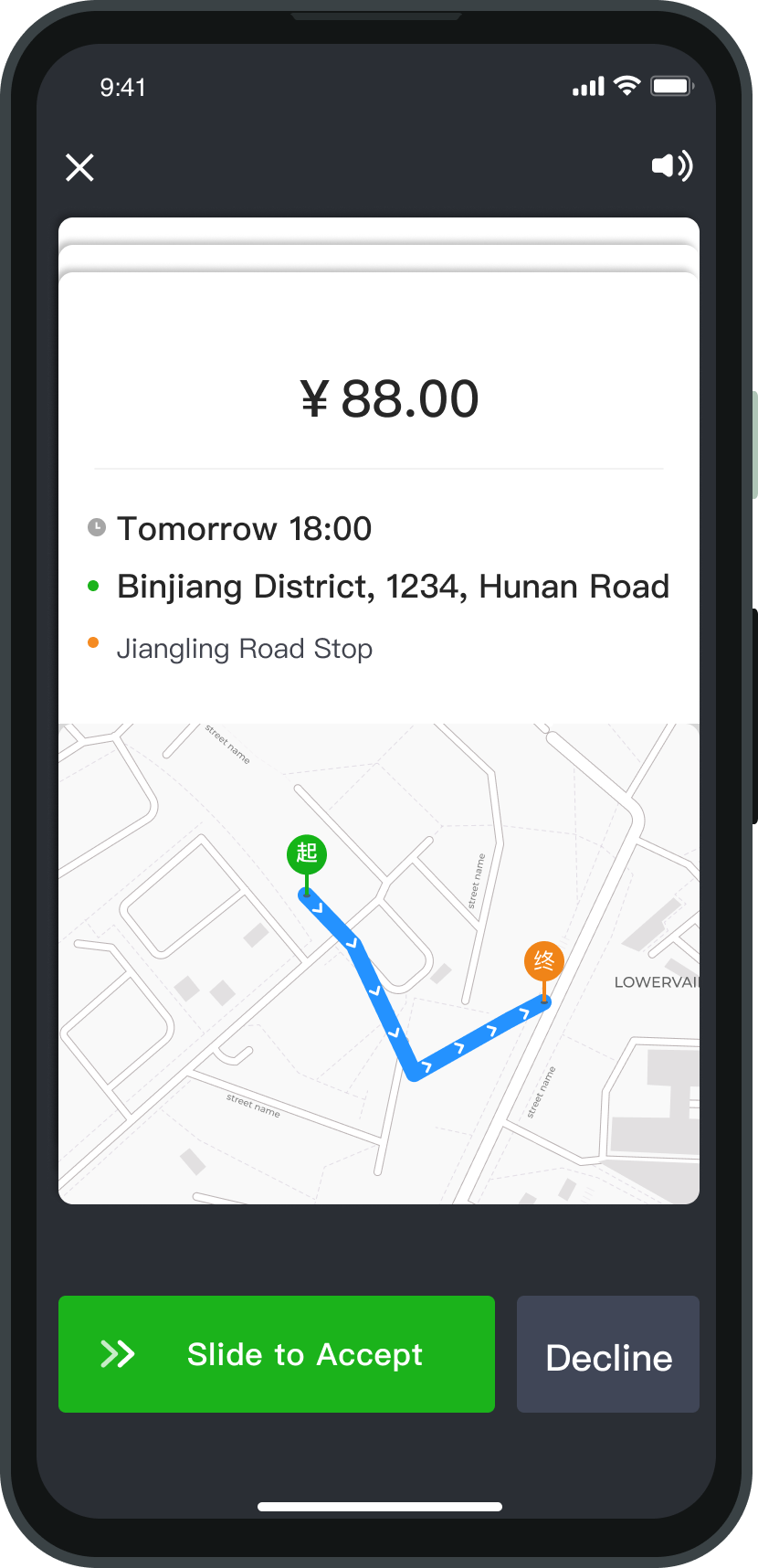
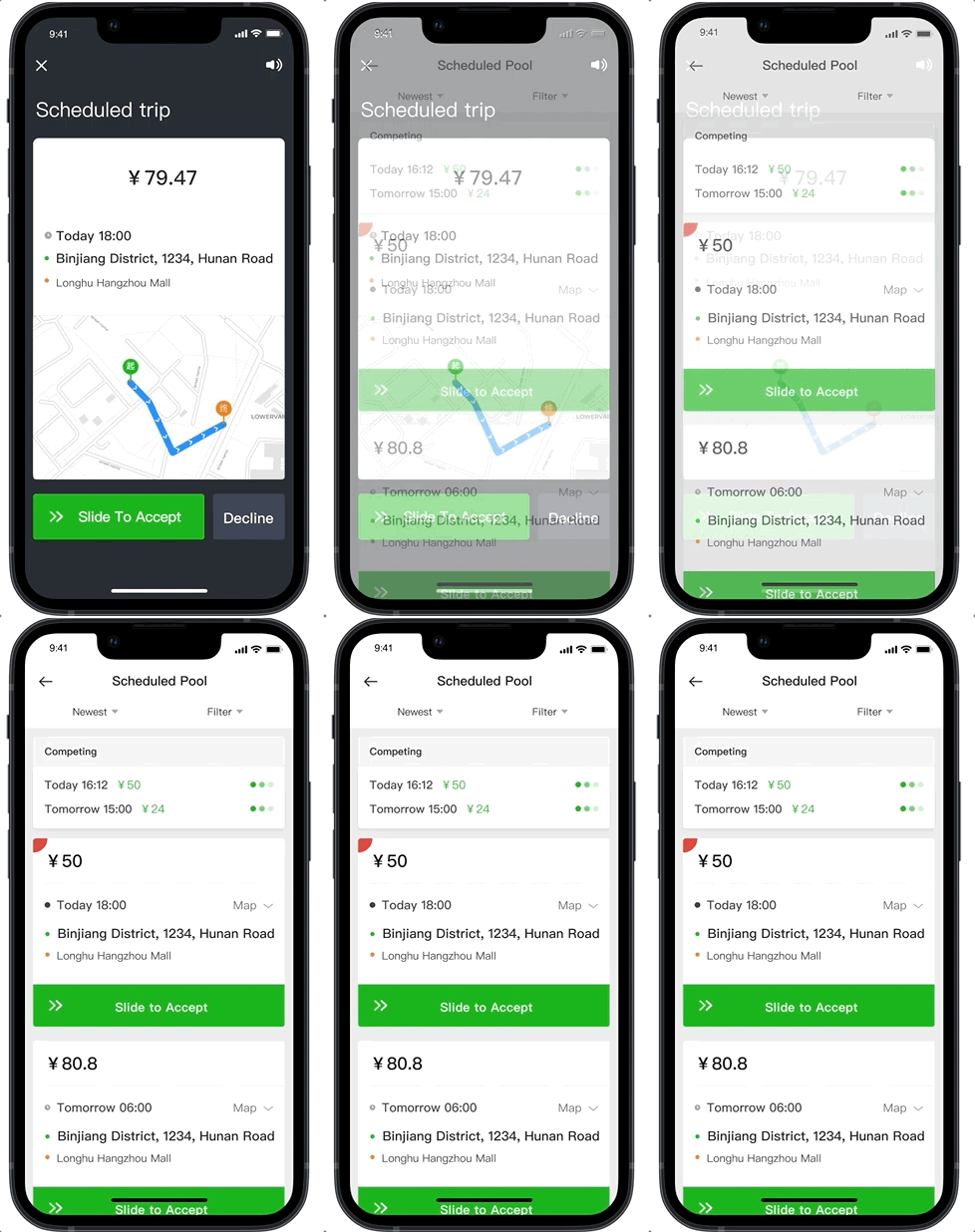
With additional trips shown behind the current one, allowing drivers swipe to view and decline next trips.
I conducted a design critique session with PMs and other designers, and I learned:


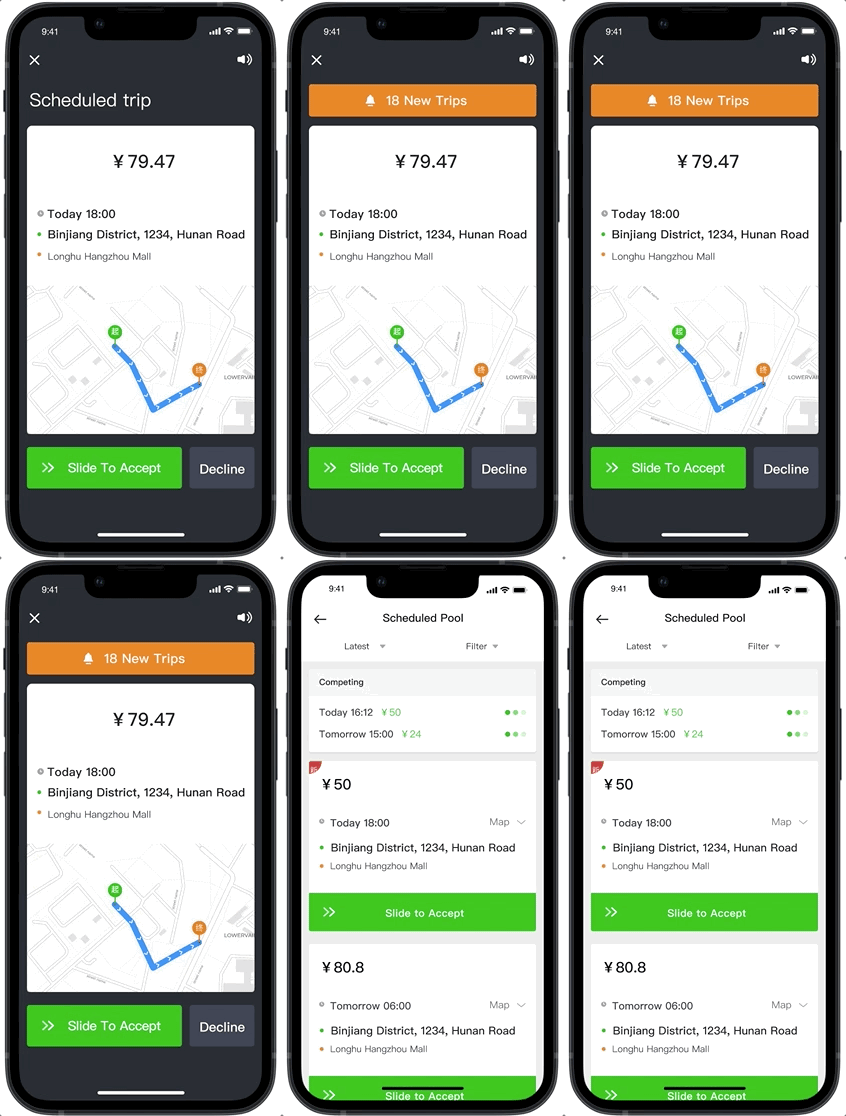
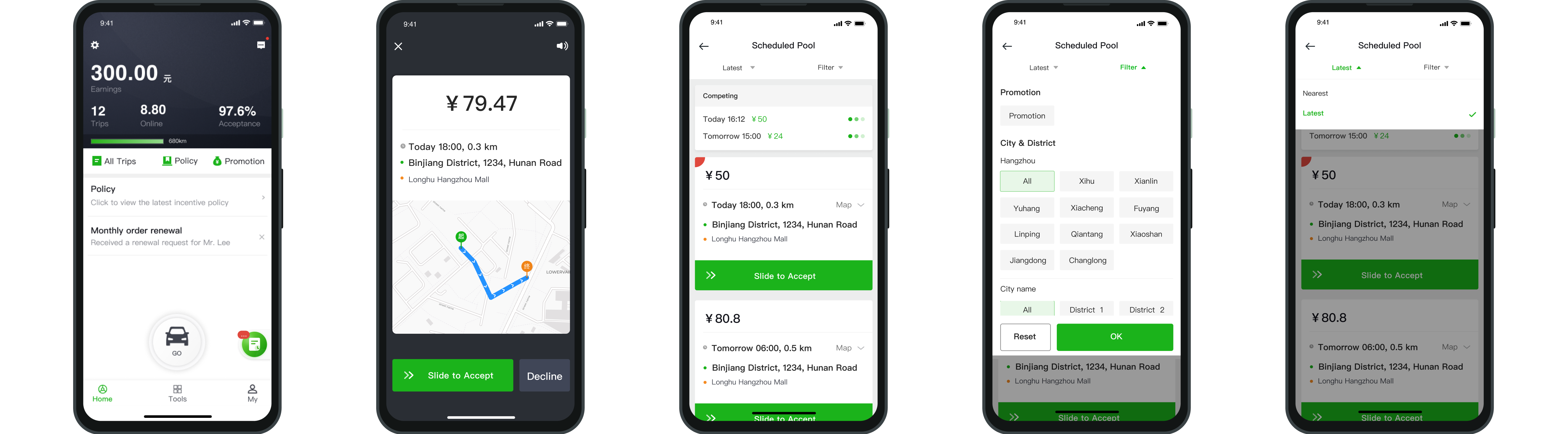
Improved design now displays one trip at a time, with notifications for incoming trips. Drivers can access the scheduled pool by clicking the notification and selecting additional trips, streamlining the process.

Drivers face challenges accurately accepting specific scheduled trips when many scheduled trips are incoming, leading to potential acceptance of the wrong trip, incurring costs or negative emotions.
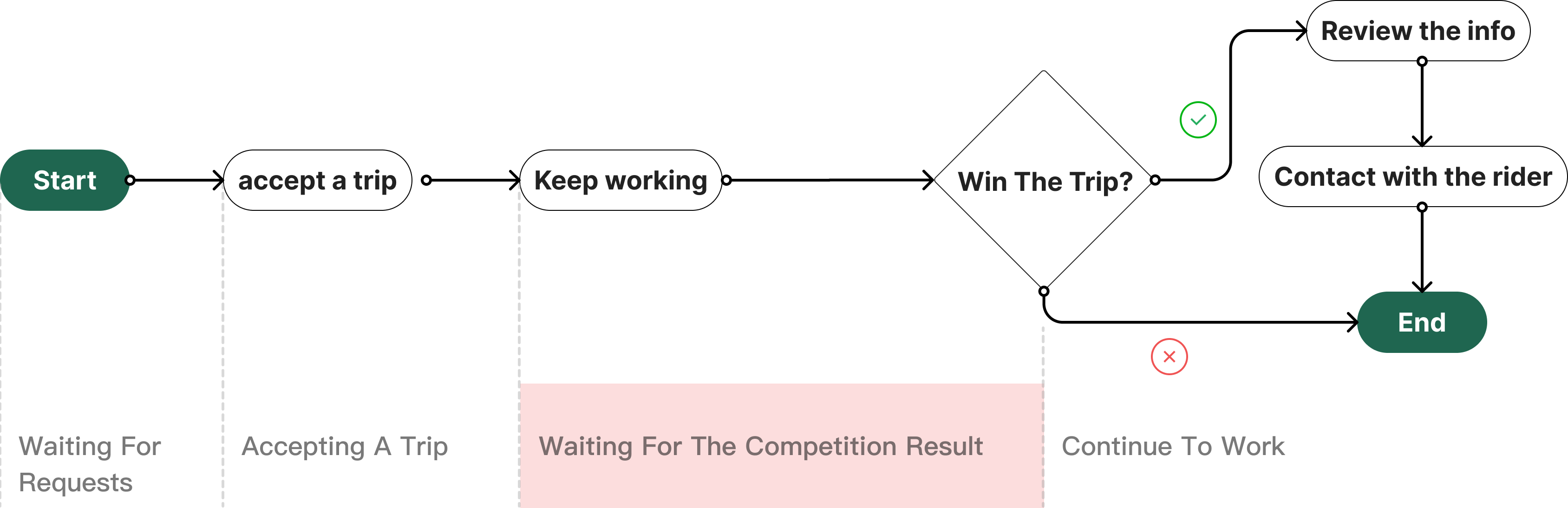
So I was thinking how could I make the waiting status more intuitive for drivers.

These were the two most solid solutions among multiple ideas at that time.

After accepting the trip, the page will change to the scheduled pool page. In this page, drivers can see the competition status.

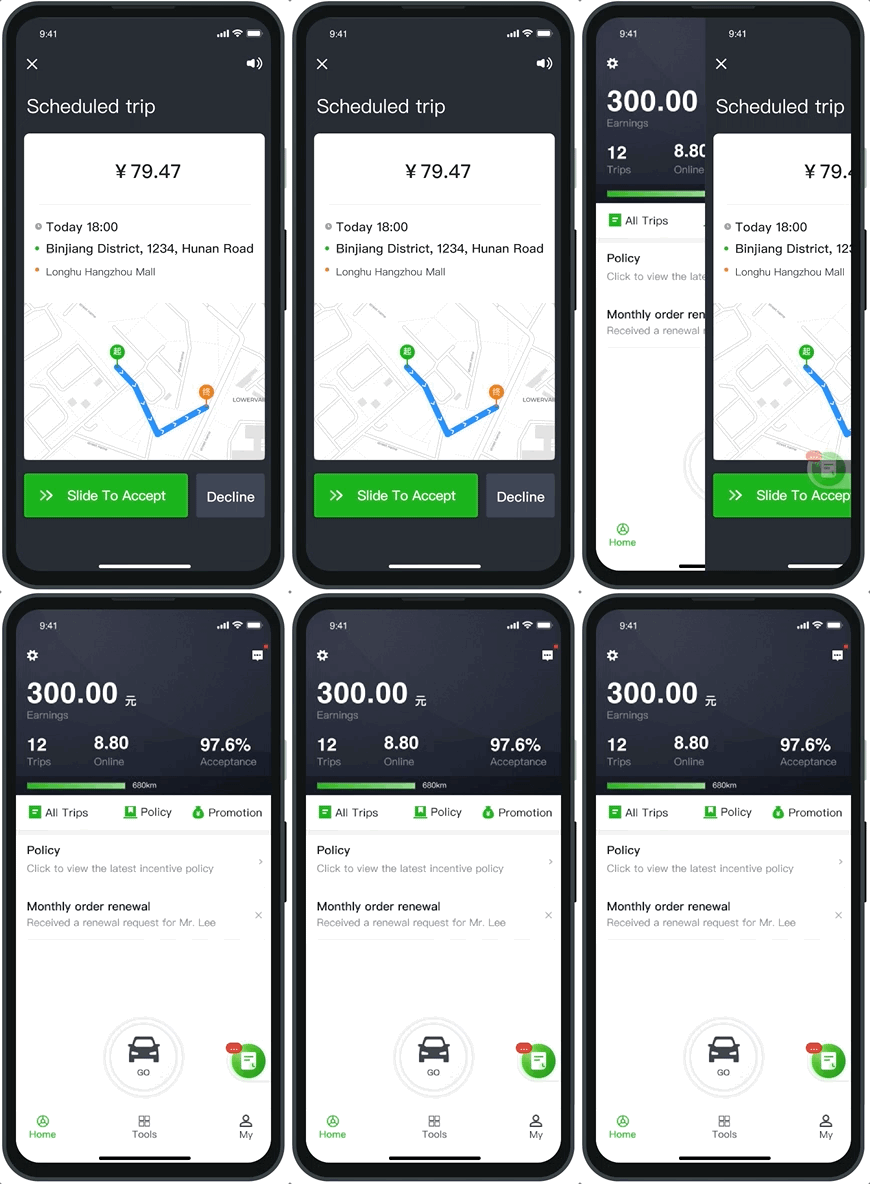
After accepting the trip, the page will back to pervious page and show an icon with status badge, allowing drivers to continue their work.
I collaborate closely with PMs on strategy and design. Despite thorough discussions, we couldn't reach a consensus on the best solution, making user testing crucial in determining the final design.
I collaborated with another designer on user testing, testing 6 drivers through a high-fidelity prototype. User testing helped me verify that my design solution was working, and also identified some improvements that I can made.
After accepting a trip, drivers prefer to return to their previous workflow rather than selecting more.
When selecting trips, drivers focus first on the price of the trip, then the time and the pickup point.
In order to better select trips, drivers want to see the distance between pickup and their current position.

Comparing the data of 4 months before and after the project launch, we get the following results.

After accepting the trip, the page will change to the scheduled pool page. In this page, drivers can see the competition status.
Work closely with PMs and engineers is very important, which help me to identify and correct issues in a timely manner.